REVIEW · AO NANG
Ao Nang: Half-Day Thai Cooking Class Krabi Province
Book on GetYourGuide →Operated by Oh-Hoo · Bookable on GetYourGuide
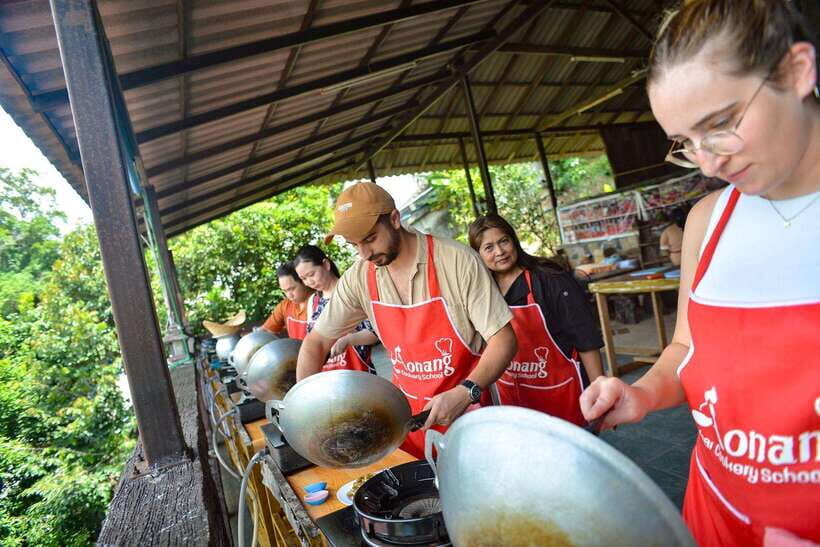
Cooking in Krabi doesn’t get more hands-on than this. You’re picked up in Ao Nang, whisked to an open-air hillside kitchen near a temple, and taught to make Thai favorites at a comfortable pace.
What I like most is the way the class removes intimidation. Even if you’re nervous with a knife, you’ll still turn out proper Thai food, including curry paste made with a mortar and pestle. I also love the setup: max 20 people and, in my favorite moments, small groups that make the whole thing feel personal (I’ve seen instructors like Pearl get plenty of one-on-one attention). One possible drawback: the session is strict on age and mobility—children under 12 aren’t suitable, and it’s not listed for people with mobility impairments.
In This Review
- Key Things To Love About Ao Nang’s Half-Day Class
- Ao Nang Pickup, Then Straight Into the Cooking Zone
- The Cooking Method: Simple Steps, Real Thai Flavor
- Your Menu Choices: What You’ll Actually Cook
- The 3-dish version (shorter menu)
- Morning course (5 dishes)
- Afternoon course (5 dishes)
- Dinner course (5 dishes)
- What the Class Feels Like In Real Time
- The Hillside Location and Temple-Next-Door Bonus
- Value for Money: What $41 Buys You
- Who Should Book This (and Who Might Want to Skip It)
- Should You Book the Ao Nang Cooking Class?
- FAQ
- Is pickup included, and where does it operate?
- How long is the class?
- What dishes will I cook?
- Can I request vegetarian, vegan, or non-spicy food?
- Do I get a recipe book and certificate?
- What’s the group size, and does the class run if only a couple people book?
Key Things To Love About Ao Nang’s Half-Day Class
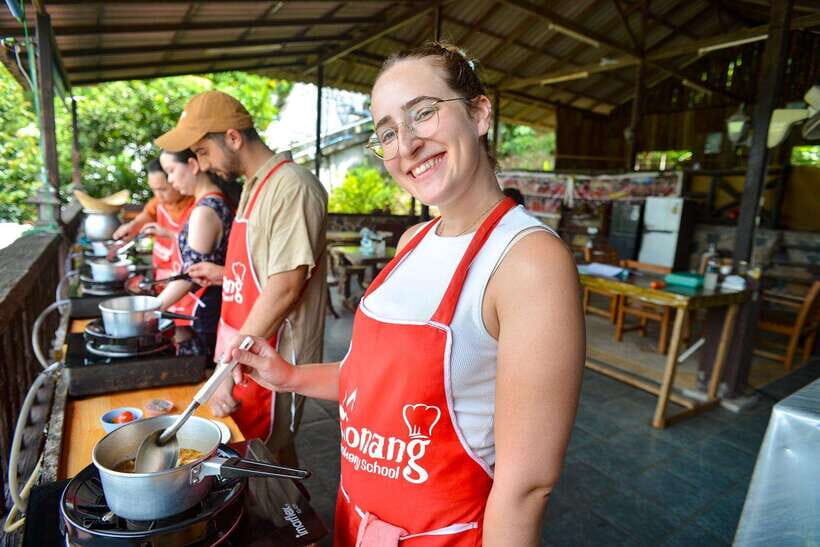
- Hillside, open-air cooking area beside a temple, with an eye-pleasing view while you cook
- Curry paste the traditional way, using a mortar and pestle so flavors make sense
- Small-group feel (up to 20; minimum 2 to run), often with personal help
- You choose your menu (often 5 dishes), including curries plus crowd favorites like Pad Thai
- Take-home support: recipe book and certificate, plus plenty of food to eat and share
Ao Nang Pickup, Then Straight Into the Cooking Zone
This is the kind of activity that starts working immediately. You get hotel pickup and drop-off in the Ao Nang area, and a guide confirms the exact pickup time by email. If you’re staying in the Centara Grand Beach Resort & Villas, there’s a small twist: you take the hotel shuttle boat to Nopparat Thara Pier first. Going via Railay? Expect a short longtail boat hop (about 15 minutes) from Railay East to Ao Nam Mao Pier, then the guide meets you at the boat ticket office. If you’re based at Ton Sai, the meeting point is Phra Nang Inn reception in Ao Nang.
Once you arrive, you’re not sent on a scavenger hunt. You go right into the kitchen routine—washing up, getting assigned, and learning what you’ll cook. The place itself is a big part of the experience: people describe an open-air hillside kitchen with a raised cookery area, plus a temple right next door. That means your class isn’t trapped in a windowless room. It also helps the mood. You’re more relaxed when you’re cooking in fresh air with a great view and a temple nearby.
Time-wise, plan for 150 minutes up to about 4 hours, depending on your course and starting time. Don’t schedule something right afterward unless it’s flexible. You’ll likely be full, and you’ll want time to organize your notes and recipe book.
Other Krabi tours we've reviewed in Ao Nang



The Cooking Method: Simple Steps, Real Thai Flavor
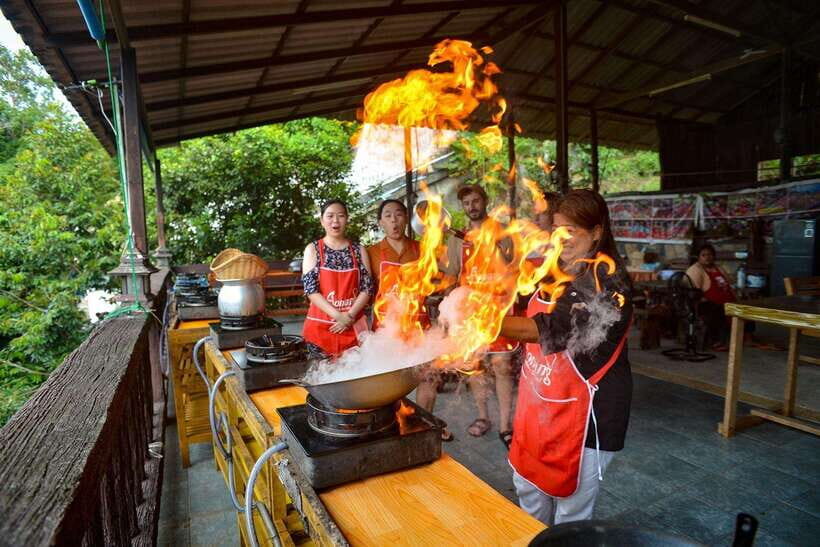
Thai cooking can sound complicated until someone breaks it into practical moves. This class does that for you. The teaching approach focuses on technique, not showmanship.
One of the best parts is the way you get introduced to Thai ingredients: herbs, vegetables, and spices. You’re not just told names. You learn how the flavors work together—why basil smells the way it does, how chili heat can be adjusted, and what balance looks like in classic Thai dishes. And yes, you can pick levels of spice and dietary style. The class states that dishes are available in vegetarian, vegan, spicy, or non-spicy options.
You’ll also get hands-on with the mortar and pestle. Making curry paste that way isn’t only traditional—it’s practical. It teaches you the difference between chili heat, garlic sharpness, and the earthy depth that comes from toasted spices. When you taste your curry later, you’ll know what you did to get there. That’s the secret to cooking Thai food at home instead of just following a recipe like it’s magic.
And in case you’re worried about “I can’t cook” energy: the class is designed for beginners. You get clear instructions from the instructor team. I’ve seen names like Pearl mentioned for English clarity, and Pheung and her family for warm, welcoming instruction. The kitchen is kept clean and organized, which matters when you’re learning knife work and sautéing hot ingredients.
Your Menu Choices: What You’ll Actually Cook
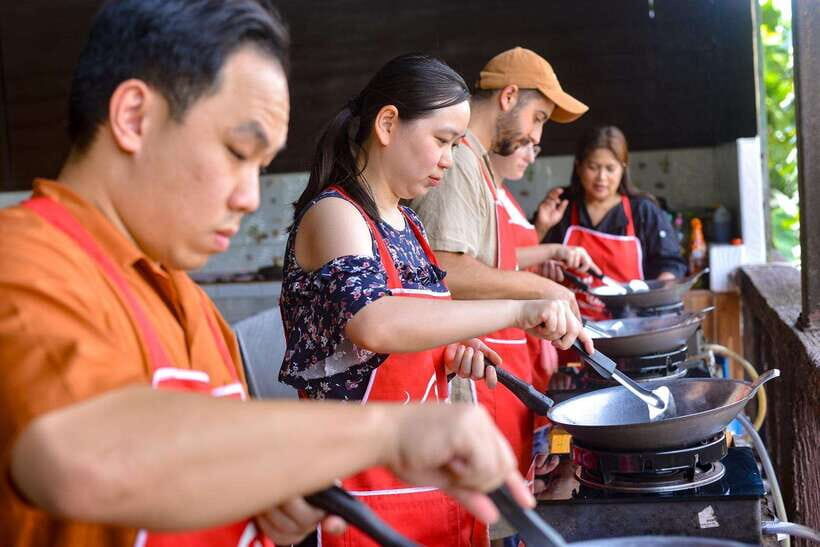
The course structure is simple: you cook and eat. The variety comes from the menu options based on when you go (morning, afternoon, dinner). You can also opt for smaller courses depending on availability.
The 3-dish version (shorter menu)
This is listed as a course with:
- Tom Yum
- Pad Thai
- Green Curry
If you want the “greatest hits” without committing to five dishes, this is a strong pick. Tom Yum gives you the sour-spicy baseline. Pad Thai teaches you how Thai noodles should taste and behave. Green curry shows off how Thai aromatics build depth fast.
Morning course (5 dishes)
Includes:
- Spring Roll
- Vegetable Tempura
- Tomkha Kai
- Pad Thai
- Fried Noodle in Soy Sauce
- Plus Green Curry, Panang Curry, or Yellow Curry (the menu list shows multiple curry choices within the overall morning set)
- Banana in Coconut Milk
- Sticky Rice Mango
That’s a lot of variety in one run: crispy textures (spring roll/tempura), soup flavors (Tomkha Kai), stir-fried noodles, and then a dessert and fruit combo. You’ll also taste different curry styles, which helps you understand that “curry” isn’t one flavor—it’s a family.
Other Ao Nang tours we've reviewed in Ao Nang


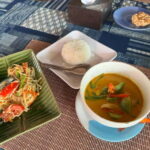
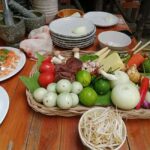


Afternoon course (5 dishes)
Includes:
- Spring Roll
- Papaya Salad
- Tom Yum Goong
- Pad Thai
- Fried Rice
- Sweet & Sour
- Massaman Curry
- Yellow Curry or Green Curry (menu list includes these options)
- Banana Fritter
- Sticky Rice Mango
This menu is great if you like mix-and-match Thai flavors. Papaya salad and tom yum bring brightness. Fried rice and sweet & sour shift you into savory-sweet territory. Then the curries round it out.
Dinner course (5 dishes)
Includes:
- Spring Roll
- Vegetable Tempura
- Tom Yum Goong
- Pad Thai
- Fried Cashew Nut
- Stir Fried Thai Basil with Minced Chicken (noted in the dinner list)
- Massaman Curry, Green Curry, or Panang Curry (listed options)
- Sticky Rice Mango
- Banana Spring Roll
Dinner adds a meat-based basil stir-fry option in the listed menu. But you can request vegetarian/less-spicy adjustments, since the class offers choices.
Practical takeaway for you: Choose the course that matches what you want to eat after. If you’re a curry person, prioritize the menu that includes multiple curry types. If you love bright salads and soups, go for the afternoon menu with papaya salad and tom yum.
What the Class Feels Like In Real Time
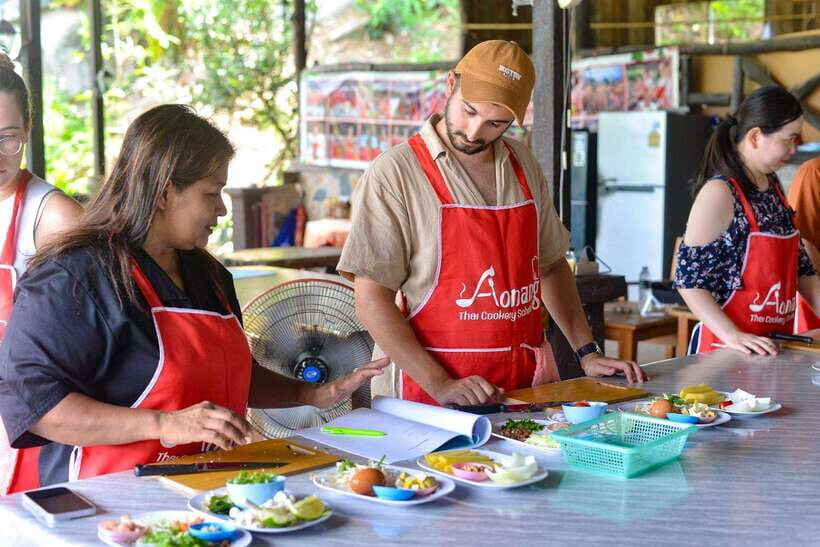
Even without exact minute-by-minute timing, you can expect a familiar rhythm.
1) Arrival and prep
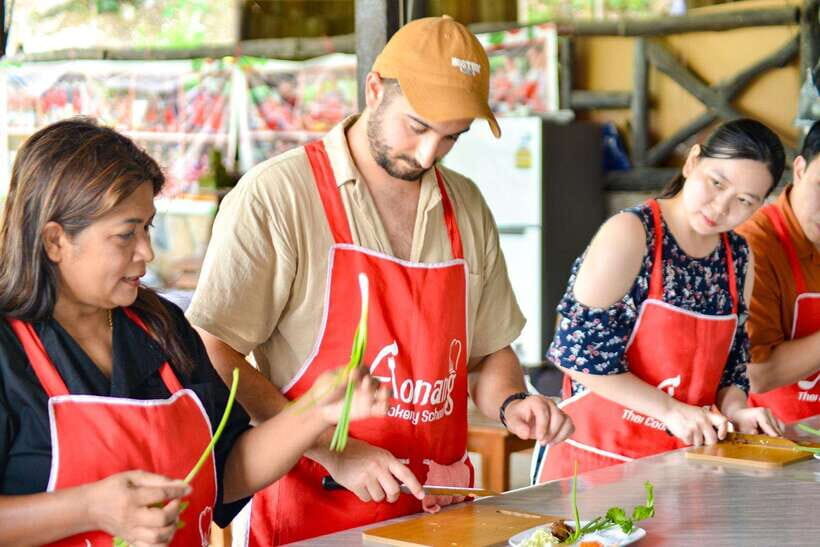
You’ll settle in quickly. The class limits capacity to 20, and it requires at least 2 participants to run. In practice, that often means you’re not packed into a giant group. Some recent group sizes mentioned were as small as 3 or 4, which changes the experience. You don’t just watch—you get help.
2) Herb, spice, and curry paste learning
This is where you understand Thai cooking. You’ll work with traditional aromatics and learn why certain flavors go together. Curry paste is the “aha” step for many people.
3) Cooking stations and hands-on training
You’ll chop, fry, stir, and assemble. You don’t need advanced skills. The instructors guide you through each step and keep the kitchen moving.
4) Tasting and eating your results
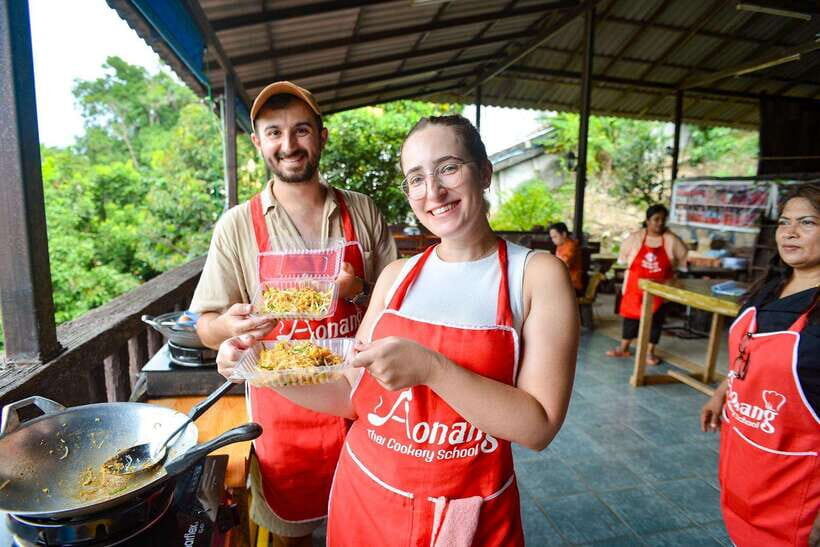
This class is full-food, not snack-only. Multiple people point out you should go with an empty stomach because you’ll end up very full. Many also mention being able to take food home if you can’t finish.
5) Recipe book notes and certificate
A key part is the recipe book. You get one, and you’re encouraged to add your own notes while you cook. People love this because it turns a one-time class into a repeatable method later. You also receive a certificate at the end.
A small extra bonus: people mention cute kitties around the area. That’s not the reason to book—but it helps the atmosphere feel human and relaxed.
The Hillside Location and Temple-Next-Door Bonus
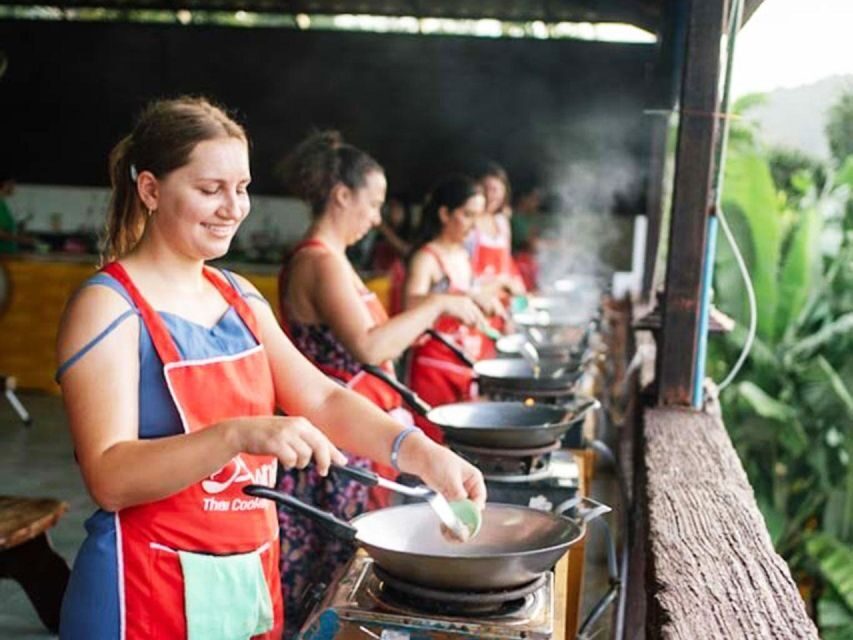
The setting is more than decor. Cooking in a raised, open-air area means you feel the day instead of being stuck indoors. Reviews highlight the view from the raised cooking area, shady and ventilated conditions, and the temple beside the building. You can often pair the class with a quick look around before or after you eat.
If you’re the type who likes your activities to have more than one payoff, this one does. You cook your lunch or dinner, you get a view, and you get a cultural stop next door without needing another ticket.
One thing to consider: because it’s an outdoor hillside kitchen, weather matters. If it’s a hot day, you’ll appreciate the ventilation more than you think. If it’s pouring, you’ll still be cooking, but your comfort level might change.
Value for Money: What $41 Buys You
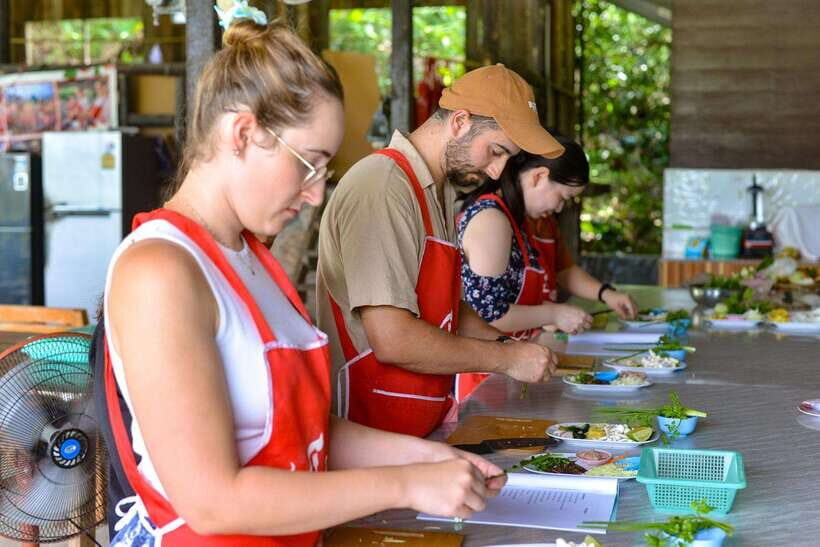
At about $41 per person, you’re paying for three things at once:
- Instruction that makes Thai food doable: curry paste technique, ingredient balance, and practical steps.
- Food you actually eat: you’re not leaving hungry or stuck with tiny samples.
- Take-home value: recipe book plus a certificate, and enough food to share or store.
The “value” question is usually: is this just entertainment? Here, it’s not. The class structure is built so you produce recognizable dishes and learn the logic behind them. And because you can choose vegetarian or different spice levels, you’re more likely to enjoy what you make.
Transport is also part of the value. Pickup/drop-off in the Ao Nang area is included, and transfer options are listed for other nearby areas with a stated extra charge for roundtrip (200 THB per person, minimum 2 people). That keeps the experience smooth without forcing you to plan rides in the middle of your day.
Who Should Book This (and Who Might Want to Skip It)
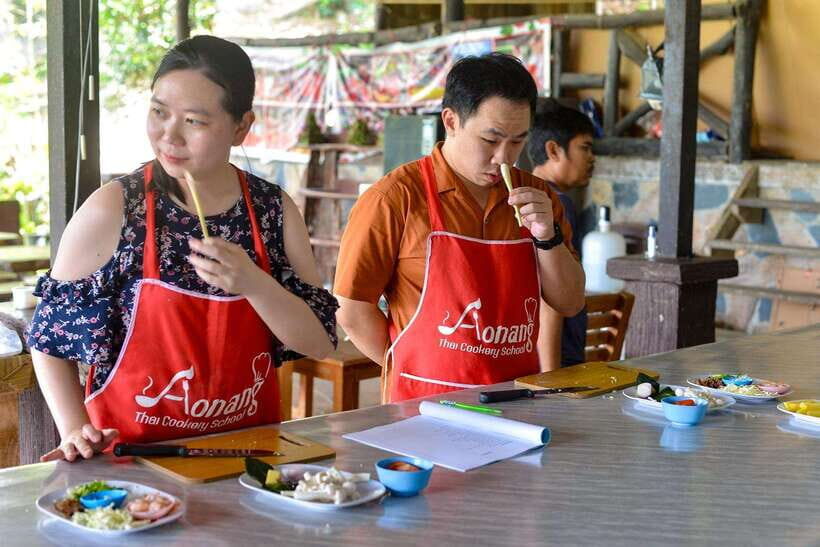
This class is a great fit if you:
- Want a hands-on activity that feels like real cooking, not watching
- Like Thai flavors and want to learn how to recreate them at home
- Appreciate small-group attention when possible
- Want a meal out of the deal (you’ll eat a lot)
It’s also a strong choice for couples and friends, especially if you like getting one teacher per small group. Reviews regularly mention how personal the instruction felt in smaller classes.
It’s less suitable if:
- You need accessibility accommodations. The activity is listed as not suitable for people with mobility impairments
- You’re traveling with children under 12. It’s listed as not suitable for kids under 12
Should You Book the Ao Nang Cooking Class?
Yes—if you want a practical, tasty way to spend half a day in Krabi. This is one of those experiences where the payoff is immediate (your dishes), plus long-term (your notes and recipe book). The location next to a temple and the open-air hillside kitchen add real atmosphere, not just a backdrop.
Before you book, do two quick checks:
- Pick the course time that matches the dishes you’ll care about most (curries, soups, noodles, and desserts all vary by menu).
- Be ready to eat. This class is not light. If you like Thai food, you’ll be happy. If you prefer tiny tastes, you might feel overfull.
If you want a souvenir that’s edible and teachable, this is a smart bet. You’ll leave with recipes, a certificate, and the confidence to cook at least a few Thai favorites without guesswork.
FAQ
Is pickup included, and where does it operate?
Pickup and drop-off are included for hotels in the Ao Nang area. If you’re staying at Centara Grand Beach Resort & Villas, you’ll take the hotel shuttle boat to Nopparat Thara Pier. For Railay, pickup is from the boat ticket office at Ao Nam Mao Pier. For Ton Sai, you’ll meet at Phra Nang Inn reception in Ao Nang. You’ll receive the exact pickup time by email.
How long is the class?
The duration is listed as 150 minutes to about 4 hours, depending on the course and starting time.
What dishes will I cook?
You cook based on the course menu. Options include a 3-dish course (Tom Yum, Pad Thai, Green Curry) and 5-dish menus for morning, afternoon, and dinner, each with a mix of spring rolls, salads/soups, noodles, fried dishes, curries, and desserts.
Can I request vegetarian, vegan, or non-spicy food?
Yes. The class states dishes are available in vegetarian, vegan, spicy, or non-spicy options to suit your taste.
Do I get a recipe book and certificate?
Yes. You receive a free recipe book and a certificate with the class.
What’s the group size, and does the class run if only a couple people book?
The class has a maximum capacity of 20 people and requires at least 2 participants to proceed.